

Smok Astronom – The Astronomer Dragon
| Kategoria: | Smoczy szlak |
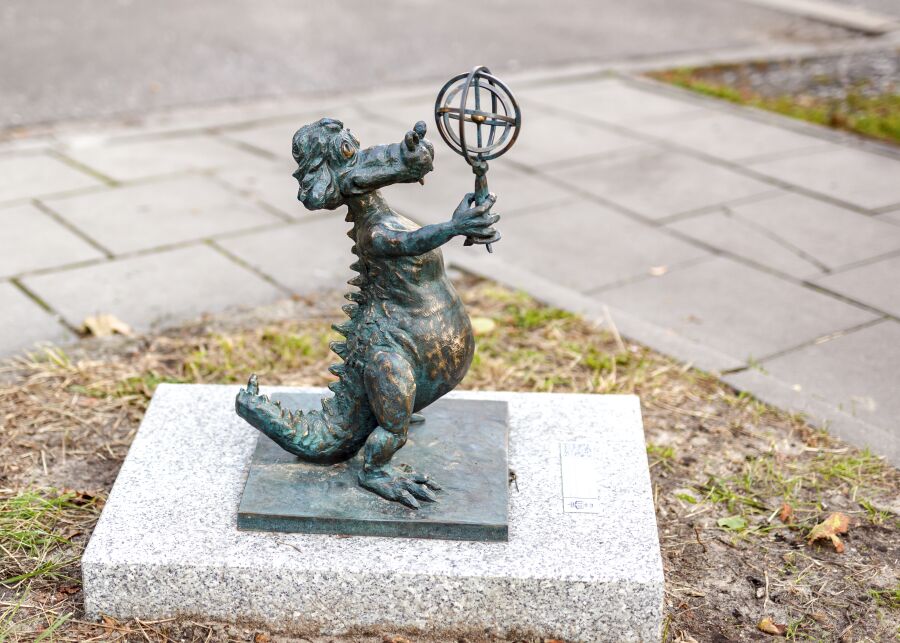
| Smok astronom – stoi przy murze Ogrodu Botanicznego (the Astronomer Dragon stands by the wall of the Botanical Garden) | |
| Adres: | ul. Kopernika 27, Kraków |
Smok trzymający przyrządy znane z obrazów o Mikołaju Koperniku nawiązuje do dziejów astronomii w Krakowie, a szczególnie do pierwszego państwowego obserwatorium astronomicznego w Collegium Śniadeckiego, które było ulokowane na terenie pobliskiego Ogrodu Botanicznego. Smok zachęca do zapoznania się z osiągnięciami sławnych astronomów związanych z Krakowem – Mikołaja Kopernika, Jana Śniadeckiego, Tadeusza Banachiewicza, czy Kazimierza Kordylewskiego.
Ale to miejsce nie jest związane tylko z astronomią. Ogród Botaniczny sam w sobie wart jest wizyty i obejrzenia, gdyż jego kolekcja liczy kilka tysięcy różnych roślin rosnących na powierzchni prawie 10 ha, to prawdziwe żywe muzeum flory z całego świata i cenny obiekt przyrody, pomnik historii nauki, sztuki ogrodniczej i kultury. Niektóre rośliny pamiętają czasy I Rzeczypospolitej, gdyż ogród założono w 1783 r. z inicjatywy Komisji Edukacji Narodowej i jest najstarszym polskim ogrodem botanicznym.
Ponadto, po drugiej stronie muru znajduje się nie lada atrakcja – otóż przez teren ogrodu przebiega jeden z najstarszych południków zerowych w Europie i na świecie, który biegnie dokładnie po linii 19˚ 57’ 21,21’’ E. Choć oczywiście najsłynniejszym na świecie południkiem jest południk Greenwich, to i ten krakowski nie jest gorszy, gdyż np. korzystał z niego Mikołaj Kopernik, który wszystkie swoje wyliczenia zawarte w książce „O obrotach ciał niebieskich” wyliczył właśnie na jego podstawie południka krakowskiego. Również metr krakowski, o którym może opowiedzieć smok spod kościoła św. Mikołaja wyliczono na tym południku.
Choć pamięć o krakowskim południku została przyćmiona przez ten londyński, to warto go zauważyć przed budynkiem, co daje też niecodzienną możliwość, aby jednocześnie stanąć na obu półkulach – wschodniej i zachodniej.
[English]
This dragon holding instruments familiar to us from paintings portraying Nicolaus Copernicus alludes to the history of astronomy in Kraków, and in particular to the first state-supported astronomical observatory at Śniadecki College, which was located in the nearby Botanical Garden. The dragon encourages visitors to learn about the achievements of famous astronomers associated with Kraków, such as Nicolaus Copernicus, Jan Śniadecki, Tadeusz Banachiewicz or Kazimierz Kordylewski.
But this place is not just about astronomy. The Botanical Garden in itself is worth a visit and a look, as its collection includes several thousand different plants growing on an area of almost 10 hectares; it is a real living museum of flora from all over the world and a valuable natural site, a monument to the history of science, horticultural art and culture. Some plants date back to the times of the First Republic, as the garden was founded in 1783 on the initiative of the Commission of National Education, making it the oldest Polish botanical garden.
In addition, on the other side of the wall, there is quite an attraction – one of the oldest reference point zero meridians in Europe and the world, which runs exactly along the line 19˚ 57' 21.21'' E, which passes through the garden. Although, of course, the most zero famous meridian in the world is the Greenwich Prime Meridian, the Krakow meridian is no worse, as, for example, it was used by Nicolaus Copernicus, who calculated all his calculations contained in his publication "De revolutionibus orbium coelestium [On the Revolutions of the Heavenly Spheres]" on the basis of the Krakow meridian. The Krakow standard reference metre, which can be explained by the dragon from under St Nicholas' Church, was also calculated on this meridian.
Although the memory of the Krakow meridian has been overshadowed by that of London, it is worth stopping and taking note of it in front of the building, which also provides the unusual opportunity to stand in both hemispheres – eastern and western – at the same time.