

Smok z literą K – The Dragon with the Letter K
| Kategoria: | Smoczy szlak |
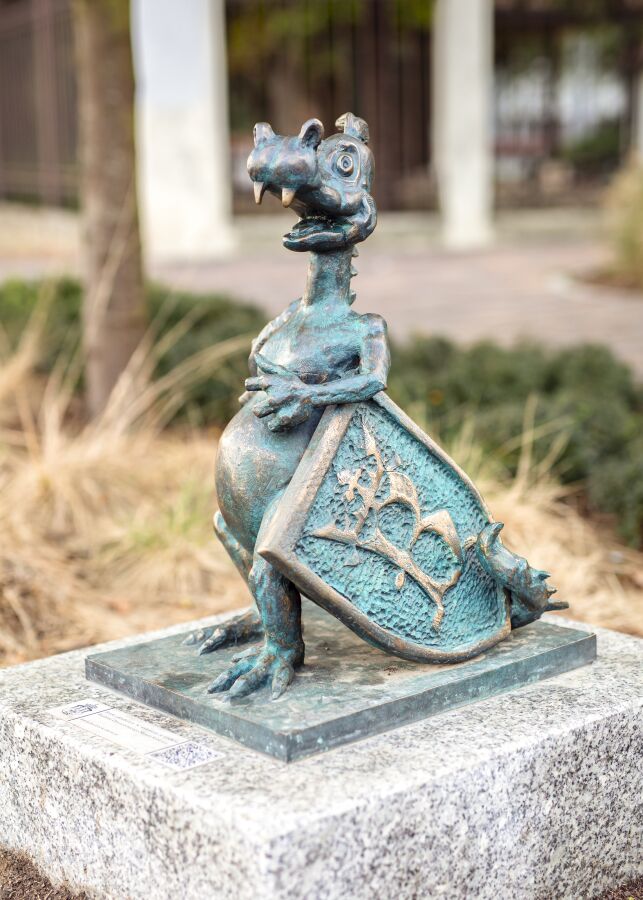
| smok stoi na skrzyżowaniu ulic Krakowskiej i Rybaki (the dragon stands at the intersection of Krakowska and Rybaki Streets) | |
| Adres: | ul. Rybaki, Kraków |
Smok stoi na skrzyżowaniu ulic Krakowskiej i Rybaki. Trzyma w ręku tarczę ze stylizowaną literą „K”. Wiele osób przypuszcza, że jest to litera symbolizująca Kraków, zapewne utwierdzani w tym przez planszę tytułową wyświetlaną przez wiele lat przed programami emitowanymi przez TVP Kraków, na której widniały litery z drzwi wejściowych do Katedry Wawelskiej.
Jednak tak naprawdę taka właśnie litera jest trzymana przez smoka nie bez powodu. Znajdowała się w herbie miasta Kazimierza, funkcjonującego przez prawie 500 lat koło Krakowa i była inicjałem króla Kazimierza Wielkiego – założyciela tego miasta. Miasto noszące królewskie imię zostało założone w drugim roku panowania króla, gdy był on jeszcze królem Kazimierzem II. Król miał przypuszczalnie także wielkie plany w stosunku do Kazimierza, planując właśnie tam wybudować gmachy Akademii Krakowskiej, a rozwijające się podkrakowskie miasto zyskało dwa piękne i monumentalne kościoły – św. Katarzyny Aleksandryjskiej i Bożego Ciała. Zdecydowanie warto odwiedzić, podobnie jak starszy od nich kościół na Skałce.
Z czasem na Kazimierzu obok ludności chrześcijańskiej zaczęła coraz liczniej osiedlać się ludność żydowska, a obie kultury wytworzyły charakterystyczny klimat tej części miasta. Widać to zwłaszcza w części Kazimierza bliżej ul. Starowiślnej.
Co ciekawe, miasto Kazimierz powstało na wyspie, opływanej przez Wisłę. Obecnie rzeka płynie ona tylko jednym korytem, drugie zostało zasypane w XIX w. Leżało ono tam, gdzie dziś biegnie ul. Józefa Dietla. Sama nazwa ul. Krakowskiej wynika z historii tego miejsca i czasów, gdy ulica ta prowadziła z Kazimierza ku Krakowowi. W końcu, Kraków wchłonął w 1800 r. Kazimierz, ale władze miasta zdecydowały się nazwę ulicy pozostawić.
[ENGLISH]
This dragon stands at the junction of Krakowska and Rybaki streets. It holds a shield with a stylised letter 'K' in its hand. Many people assume that this is the letter symbolising Krakow, probably confirmed by the title board displayed for many years before programmes broadcast by TVP Krakow, which showed the letters from the entrance door to Wawel Cathedral.
However, this letter is actually being held by the dragon for a reason. It was on the coat of arms of the town of Kazimierz, which existed for almost 500 years near Krakow, and was the initial of King Casimir the Great, the founder of this town. The town bearing the royal name was founded in the second year of the king's reign, when he was still simply King Casimir II and not yet Great. The king presumably also had great plans for Kazimierz, planning to build the edifices of the Krakow Academy there, and the developing city near Krakow gained two beautiful and monumental churches, St Catherine of Alexandria and Corpus Christi. Definitely worth a visit, as is the Church on the Rock, which is older than them.
Over time, the Jewish population began to settle in Kazimierz in increasing numbers alongside the Christian population, and both cultures created a distinctive atmosphere in this part of the city. This can be seen especially in the part of Kazimierz closer to Starowiślna Street.
Interestingly, the town of Kazimierz was built on an island, drained by the Vistula River. Today, the river flows in only one channel, the other having been buried in the 19th century. It used to lie where Józefa Dietla Street runs today. The very name of Krakowska Street stems from the history of the place and the times when the street led from Kazimierz towards Krakow. Eventually, in 1800, Krakow absorbed Kazimierz, but the city authorities decided to keep the street name.