

Klasztor cystersów i kościół pw. Matki Bożej Częstochowskiej i bł. Wincentego Kadłubka
| Kategoria: | Nowa Huta na Europejskim Szlaku Kulturowym ATRIUM |
| Adres: | Osiedle Szklane Domy 7, Kraków |
Klasztor cystersów i kościół pw. Matki Bożej Częstochowskiej i bł. Wincentego Kadłubka (1984−1994, proj. Andrzej Nasfeter, Krzysztof Dyga), os. Szklane Domy 7
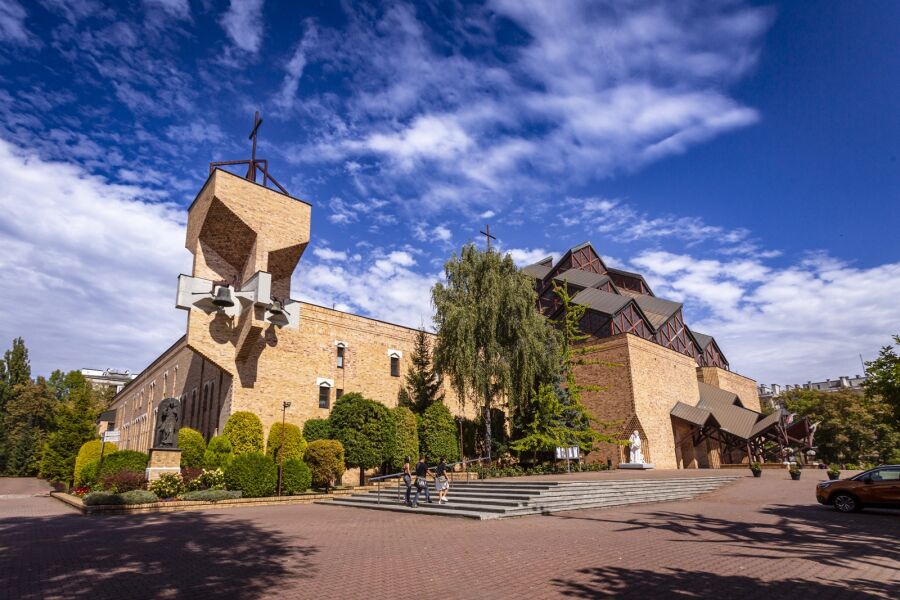
Zespół sakralny na os. Szklane Domy – z kościołem, klasztorem cystersów i częścią edukacyjno-gospodarczą – powstał jako efekt długoletnich starań mieszkańców o obecność Kościoła w ateistycznej przestrzeni Nowej Huty. Wzniesiony w latach 1984–1994 według projektu warszawskich architektów Krzysztofa Dygi i Andrzeja Nasfetera, budynek reprezentuje sakralny postmodernizm, który miał wyraźnie kontrastować z szarością modernistycznych blokowisk. Kompleks oparty jest na rzucie kwadratu z czterema dziedzińcami i centralnie usytuowaną, monumentalną salą modlitwy o wysokości ponad 20 metrów. Całość otacza 12-metrowy ceglany mur, inspirowany średniowieczną architekturą cysterską, ponad którym wznosi się rzeźbiarski dach z przeszkloną strukturą przypominającą kryształ. Projekt, symbolicznie wpisujący się w kontekst osiedla i pobliskiego opactwa cysterskiego w Mogile z XIII w., stanowi architektoniczną deklarację zwycięstwa religii i wspólnoty nad ideologią PRL-u, a sam kościół był w latach 80. nie tylko miejscem kultu, ale też centrum życia społecznego i opozycyjnego.
[ENGLISH]
Cistercian Monastery and Church of Our Lady of Częstochowa and Blessed Wincenty Kadłubek (1984−1994, designed by Andrzej Nasfeter, Krzysztof Dyga), os. Szklane Domy 7
The religious complex on the Szklane Domy (Glass House) housing estate – with its church, Cistercian monastery and educational and economic section – came about as a result of the residents' long-standing efforts to make the Church present in the atheist space of Nowa Huta. Erected between 1984 and 1994 to a design by Warsaw architects Krzysztof Dyga and Andrzej Nasfeter, the building represents a sacred postmodernism that was intended to contrast sharply with the greyness of modernist block housing. The complex is based on a square plan with four courtyards and a centrally located, monumental prayer hall over 20 metres high. The whole is surrounded by a 12-metre-high brick wall, inspired by medieval Cistercian architecture, above which rises a sculptural roof with a glass structure reminiscent of crystal. The project, symbolically placed in the context of the estate and the nearby 13th century Cistercian abbey at Mogiła, is an architectural declaration of the victory of religion and community over the ideology of the People's Republic of Poland, while the church itself was not only a place of worship but also a centre of social and opposition life in the 1980s.
[ITALIANO]
Monastero cistercense e chiesa intitolata a Nostra Signora di Częstochowa e al beato Vincenzo Kadłubek (1984–1994, progetto di Andrzej Nasfeter e Krzysztof Dyga), complesso residenziale Szklane Domy 7
Il complesso di edifici sacri del quartiere Szklane Domy – con la chiesa, il monastero cistercense e la parte educativo-gestionale – sorse come risultato dei lunghi sforzi degli abitanti per affermare la presenza della Chiesa nello spazio ateo di Nowa Huta. Costruito tra il 1984 e il 1994 su progetto degli architetti varsaviani Krzysztof Dyga e Andrzej Nasfeter, l’edificio rappresenta un postmodernismo sacro, ideato per contrapporsi nettamente al grigiore dei complessi residenziali modernisti. La struttura è impostata su una pianta quadrata con quattro cortili e una sala di preghiera monumentale, collocata al centro, alta oltre 20 metri. Il complesso è circondato da una cinta muraria in mattoni alta 12 metri, ispirata all’architettura cistercense medievale, al di sopra della quale si innalza un tetto scultoreo con una struttura vetrata che richiama un cristallo. Il progetto, simbolicamente inserito nel contesto del quartiere e della vicina abbazia cistercense di Mogiła, risalente al XIII secolo, rappresenta una dichiarazione architettonica della vittoria della religione e della comunità sull’ideologia della Repubblica Popolare Polacca; negli anni Ottanta la chiesa non fu soltanto un luogo di culto, ma anche un centro di vita sociale e di opposizione.